Saturday, November 25, 2006

The End of the Democratic Agenda?


Joe Lieberman recently hired Marshall Wittman, a high-powered and well connected aid with strong ties to John McCain, leading to speculation that Lieberman may be considering running as McCain's VP on a fusion ticket. Hard to tell how this might play out in '08, but everyone seems to be overlooking the fact that that in the shorter term this could determine the success or failure of the entire Democratic agenda.

Control of the Senate depends on Joe Lieberman. He's refused to rule out changing parties and becoming a Republican, and doing so would take control of the Senate away from the Democrats. But Lieberman knows that Democrats are likely to pick up additional Senate seats in '08, regardless of overall political trends, because Republicans will be defending 21 seats, many of them freshman, verses only 12 for Democrats. If Lieberman defected, or just stirred up a lot of trouble, he'd pay the price in two years.

But if Lieberman is thinking of being McCain's VP all bets are off. The constraints are gone, or at least vastly different. My guess is that he would remain a Dem, because a fusion ticket needs members from both main parties, but that he would constantly try to screw up the Democratic agenda in order to prove his "independence".

And there won't be a damn thing Democrats can do about it.

Monday, November 20, 2006

Who the Heck Is Steny Hoyer?


(Hint: He's not the one with the green head)


About a month ago one of my contacts who has the proverbial "Friends In High Places" in Washington DC told me that Steny Hoyer was going to be the next majority leader if Democrats took control of the House of Representatives. Despite all the fuss in the media and on the blogs about the race between Hoyer and John Murtha, the insiders knew all along what the outcome was going to be, and the results of the leadership election, 149-86 in Hoyer's favor, shows that it was never even a contest.

So who is Steny Hoyer?

He's a moderate on most issues, but hawkish on foreign policy. A nice guy, liked by most of his colleagues, but also a consummate political hack. A man who puts process and relationships ahead of values and ideology. A man of great ambition and questionable loyalty. As majority leader he could be a huge asset to speaker Pelosi, or he could sabotage her and undercut the Democratic agenda. Hard to say which way he'll go.

The best info I've seen on Hoyer is a Washington Monthly profile article that was published ... about a month ago:
If Hoyer, 67, appears to have an extra spring in his step lately, there’s a good reason. As the number-two Democrat in the House, he’ll likely become majority leader if Democrats win control this November.

[...]
Since entering Congress in 1981, Hoyer has forged an identity as a centrist, particularly on foreign-policy issues, that has helped make him the leadership’s unofficial liaison to the Blue Dog Democrats—a group of the caucus’s more conservative members—but has at times created tension with the more liberal Pelosi. On the day last December that she publicly backed a call from Rep. John Murtha (D-Pa.) for withdrawal from Iraq, Hoyer released a statement declaring that such a policy “could lead to disaster.” And earlier that year, he angered the leader by supporting a bill being pushed by the credit-card industry designed to make it harder for people to declare bankruptcy.
Not so good. But here's where Hoyer could really help:
This conservatism has not won him friends among liberal bloggers—who argue that Democrats should have the courage of their convictions on basic issues of war and peace and economic fairness. But if Democrats do indeed retake power next year, keeping the party united will be crucial to many of the tasks that they’ll confront—from working to fix disastrous Republican legislation to conducting the vigorous oversight of the Bush administration that has been all but non-existent over the last six years. Because many of the House’s more conservative Democrats—not to mention its Republicans—simply trust Hoyer more than they do Pelosi, he stands to play a crucial role in holding the often fractious party together, and in working with the GOP, where possible, to pass legislation and hold the president accountable.
On the other hand...
It’s less Hoyer’s centrism that may cause problems for Democrats, and more what might be called his establishmentarianism. [...] In some ways, a leader with a healthy respect for Congress’s traditional procedures would be a breath of fresh air after the last decade, in which Reps Newt Gingrich (R-Ga.) and Tom DeLay (R-Texas) rode roughshod over almost a century of established legislative norms. But the flip side of Hoyer’s obsession with process and old-fashioned relationship building is a reluctance to think strategically about changing the ways that Washington operates—even when doing so would benefit Democrats. Over the last year and a half, Hoyer—a protégé of Tony Coelho, the former California congressman who revolutionized Democratic fundraising in the 1980s—has led an aggressive effort to raise money from K Street lobbyists. Even more important, he has seemed unwilling to fundamentally rethink the unhealthy relationship between lobbyists and legislators that currently drives our political system. If Democrats are not only to regain power, but to maintain it and govern in a fairer and more responsive fashion, they’ll need to unite behind root-and-branch reform. But the evidence suggests that Hoyer lacks the political vision, and the will, to do so.

Sunday, November 19, 2006

Our Liberal Media At Work

From Media Matters:

Democrats take control of both the US House and Senate, and this is the cover Time Magazine runs (Click on the images for slightly larger versions):


In 1994 Republicans took control of both the US House and Senate, and this is the Time cover from back then:


(The donkey with his eyeballs popping out as the elephant squashes him is a really nice touch, don't you think.)

Nothing like fair and balanced.

Who and Where?


Read this passage and see if you can figure out where it took place and who the people involved are. I've changed a few details that would give it away immediately:
"They really tried to break us down. The first night they put the temperature so high that a woman--one of the other inmates--had a seizure. The second night they made it freezing and took away many of our blankets. We didn't have access to the cots so we had to sleep on a concrete floor. When we would finally fall asleep the guards would come and yell `Are you --------? Are you so and so?' One of the [prisoners] had a fractured wrist from [getting arrested]. She had a cast on and when she would fall asleep the guard would kick the cast to wake her up. She was in a lot of pain."
Abu Ghraib? Gitmo? Obviously the prisoners must be terror suspects or threats to national security to get treated that way.

Here's a clue: these prisoners were considered so dangerous that their bail was set at nearly a million dollars each. Keep in mind that rape and murder suspects usually have bail set around a hundred thousand dollars.

Figured it out yet? This took place a couple of days ago. The place is Houston Texas. And those dangerous prisoners? Janitors who made the mistake of staging a nonviolent protest to demand better pay and benefits in one of the most Republican cities in the US. Here's the entire statement from Denise Solís, a SEIU organizer who participated in the protest and was arrested with the rest of the group:
"I'm from Texas and I helped organize the union here in Houston. For methe janitors' struggle is very personal. Coming back to Texas is likecoming home. We wanted to peacefully occupy the intersection downtownto make a statement to the city: `Houston can't go on like this, withso many living in poverty.'

We sat down in the intersection and the horses came immediately. It was really violent. They arrested us, and when we got to jail, we were pretty beat up. Not all of us got the medical attention we needed. The worst was a protester named Julia, who is severely diabetic. We kept telling the guards about her condition but they only gave her a piece of candy. During roll call, she started to complain about light-headedness. Finally she just collapsed unconscious on the floor. It was like she just dropped dead. The guard saw it but just kept going through the roll. Susan ran over there and took her pulse while the other inmates were yelling for help, saying we need to call somebody. The medical team strolled over, taking their own sweet time. She was unconscious for like 4 or 5 minutes.

They really tried to break us down. The first night they put the temperature so high that a woman--one of the other inmates--had a seizure. The second night they made it freezing and took away many of our blankets. We didn't have access to the cots so we had to sleep on a concrete floor. When we would finally fall asleep the guards would come and yell `Are you Anna Denise Solís? Are you so and so?' One of the protesters had a fractured wrist from the horses. She had a cast on and when she would fall asleep the guard would kick the cast to wake her up. She was in a lot of pain.

The guards would tell us: `This is what you get for protesting.' One of them said, `Who gives a shit about janitors making 5 dollars an hour? Lots of people make that much.' The other inmates--there were a lot of prostitutes in there--said that they had never seen the jail this bad. The guards told them: `We're trying to teach the protesters a lesson.' Nobody was getting out of jail because the processing was so slow. They would tell the prostitutes that everything is the protesters' fault. They were trying to turn everybody against each other.

I felt like I was in some Third World jail, not in America. One of the guards called us `whores' and if we talked back, we didn't get any lunch. We didn't even have the basic necessities. It felt like a police state, like marshal law, nobody had rights. Some of us had been arrested in other cities, and it was never this bad before.

They tried to break us down, to dehumanize us. But we were stronger. We made friends with the other inmates and we organized them. The prostitutes felt a lot of solidarity with us. All of us together told stories, and played games like telephone and charades. We even did stand-up comedy monologues about what was happening to us and we all laughed. One woman--a woman of deep faith--gave a sermon that was both funny and deadly serious. We showed them that we weren't afraid. We did it all together. Now we're ready to fight on for basic American rights like the freedom of speech and the right to protest."
Welcome to George Bush's America.

More information at the SEIU Houston Justice for Janitors website.

UPDATE 11/20/06: Looks like the janitors and SEIU won! From a SEIU email:
What a difference a day makes! We have reached a tentative agreement for a 3 year contract for janitors.

Wages: $1.15 increase the first year, $1.00 the second year, and $.50 the third year.

Health Care: The third year is when single payer health insurance will kick in and janitors will pay $20 per month into that plan. It is a plan designed and managed by SEIU and we are hoping to get all of our members nationwide on this plan.

Vacation: Two weeks paid vacation per year

Holidays: 6 paid Holidays

Hours: 1st year everyone must work a minimum of 4 hours a day, 2nd year everyone must work a minimum of 5 hours per day, 3rd year everyone must work a minimum of 6 hours per day.

Protection: We have a grievance procedure in place. We have protection for all of the striking workers to get their jobs back with no discipline, We have a disciplinary proceedure in place so that no one can be illegally fired for no reason any more.

Saturday, November 18, 2006

Marriage Amendment Side Effects May Include...


Republicans thought of the marriage amendment as a miracle drug that would pull their electoral asses out of the fire. Unfortunately (for them) the side effect of increased swing voter turnout often proved deadly in this strongly Democratic year.

But there's another interesting side effect that I haven't seen discussed anywhere. The marriage amendment is going to increase state taxes.

Huh?

By passing the amendment Wisconsin effectively reduced the potential labor pool for state jobs. Gays, lesbians, and unmarried couples will tend to go elsewhere, either into the private sector, which can still offer domestic partner benefits, or out of state.

When you cut supply, prices go up. That's basic economics, and it's just as true for labor as it is for material goods. The effect will be gradual and hard to measure, but it will happen. And the money the state potentially saves by not offering domestic partner benefits will not make up for the higher salaries necessary to attract and retain workers.

So the next time you run into someone who supported the amendment, be sure to thank them for voting to raise their own taxes.

Thursday, November 16, 2006

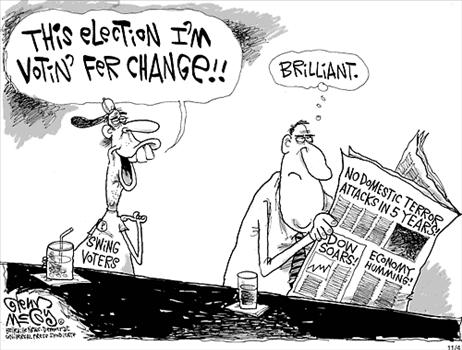
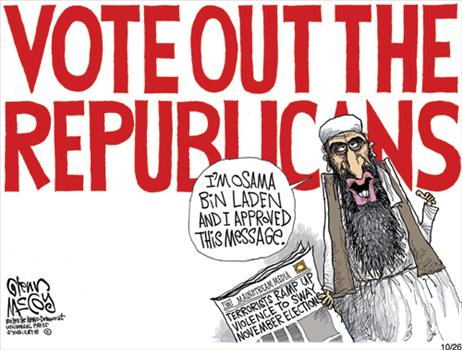
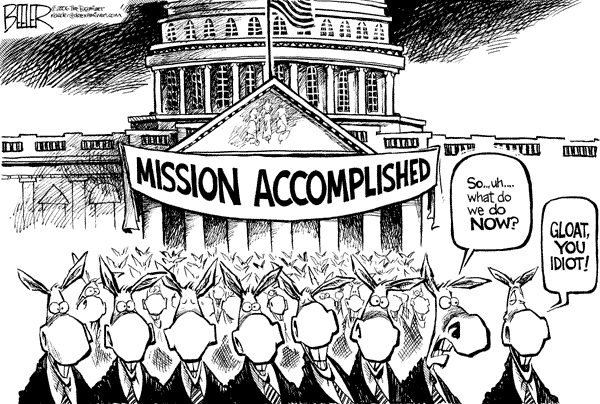
Righty 'Toons

In case you haven't noticed, I like editorial cartoons. In a single glance a good cartoon can convey complex ideas that would take paragraphs to explain. And cartoons are a valuable tool to reach people who are otherwise very unlikely to engage in politics.

Usually I present cartoons with a left or centrist point of view, but there are a number of cartoonists, a few of them quite good, on the right side of the political spectrum. Their work represents a very different point of view, and I thought it would be interesting to show some examples because they give us a window into the conservative mind.

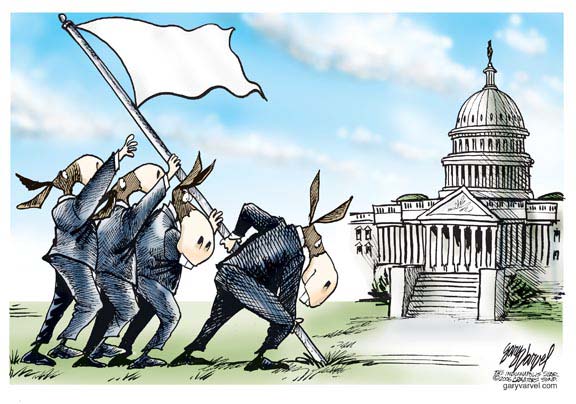
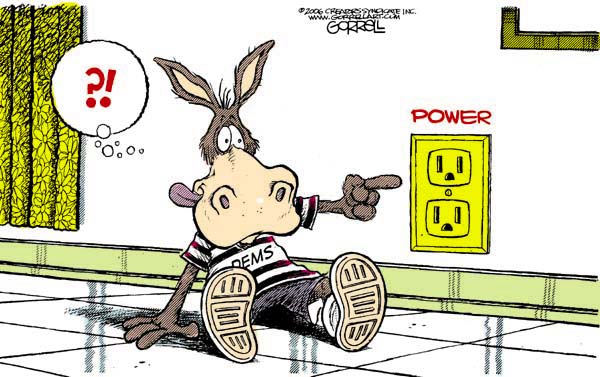
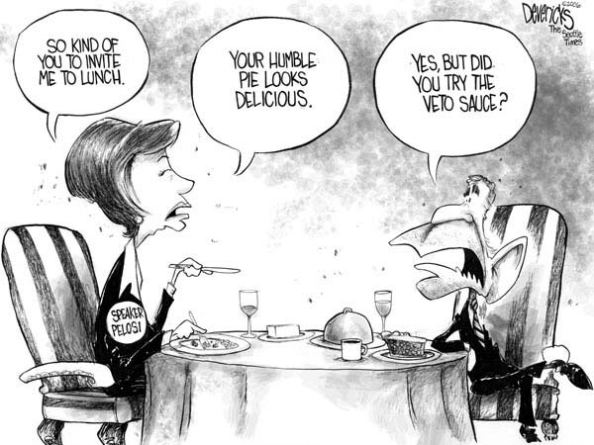
This set of cartoons is about the elections. The bitterness is obvious, but they express true and deep fears about the new direction America is going.

For more check out these sites:

http://cagle.msnbc.com/politicalcartoons/ (great site, not just righty cartoons)
http://rightoons.com/
http://townhall.com/Funnies/


Wednesday, November 15, 2006

Jessica McBride Likes Me!!!

This is a little weird.

Jessica McBride, the wicked witch of the Midwest, wrote a rather complimentary piece about my analysis of the AG race. Of course she used it as a chance to take some cheap shots at Kathleen Falk. And to give props to her husband, Republican primary AG candidate Paul Bucher. But overall it was ... pretty nice!

I guess I'm just not being mean enough to Republicans. I promise I'll try harder!

Seriously, although I'm about as partisan as they come, the whole point of the analysis I do is to find the truth, and the truth doesn't take sides.

My goal is to understand why we win or lose so that we can do a better job in future elections. I also want to get this information out to the progressive base because the better informed we are the more powerful we become. And I want to dispel some of the unjustifiable opinions that are floating around, because they tend to lead us into intellectual dead ends that damage the progressive movement.

And finally, I hope that this my work will put some pressure on the MSM to do a better job of election analysis down the road. Because the job they're doing now, as a general rule, sucks.

Tuesday, November 14, 2006

Friday, November 10, 2006

Why Kathleen Falk REALLY Lost

There's been a lot of speculation, much of it wrong, about why Kathleen Falk lost the Attorney General's race to JB Van Hollen. As Daniel Patrick Moynihan said, "Everyone is entitled to his own opinion, but not his own facts." So join me to look at the facts in this race, and learn, to the extent possible, the truth about why this was the only statewide race we lost in Wisconsin this election cycle.

This was a Democratic wave election, and every statewide Democrat seemed to benefit except for Kathleen Falk. She significantly underperformed Jim Doyle, and that's what cost her the race. Doyle received 7.3% more votes than Falk did. Had she been able to perform just one percentage point better she would have won the election. Here are the four main theories I've seen given to explain why Falk wasn't able to pick up those votes:

1. The "Blame Madison First" crowd, which includes a significant faction within the Democratic Party, claims that Falk lost because liberal Dane County (Madison) voters were mad she beat Lautenschlager in the primary, and withheld their votes to get even. This article in the Capital Times makes a slightly broader version of this claim: "Although Falk tried to reach out to Lautenschlager's supporters after the primary, Tuesday's results indicated that many of them did not come back to her."

2. A favorite among progressive bloggers is the belief that Falk lost because she didn't have a strong and consistent message, while Van Hollen did. To quote Folkbum, "The campaigns that won here in Wisconsin on Tuesday were the ones with the clear, unambiguous, crystalized messages... JB Van Hollen ran on a single clear message ... I want to fight crime! I'll get the terrorists! I'll clear out the illegal immigrants!" In Effect made a similar point.

3. The far left favors the "Doyle is so corrupt that voters wanted an AG who will keep an eye on him" theory. See this post from The Nate Report for example. Perhaps this will give away my own ideological leanings, but my belief that Falk wouldn't be able to effectively police Doyle was one of the biggest reasons why I supported Lautenschlager in the primary.

4. Kathleen Falk and her supporters complain that Wisconsin Manufacturers and Commerce simply bought the race with several million dollars of attack ads. This is a rather ironic claim since, as I showed here and here, the only reason Falk was even in this race was because she bought her primary victory over Peg Lautenschlager.

So let's look at the data and sort out these somewhat conflicting claims. You can click on any of the maps to get larger versions.
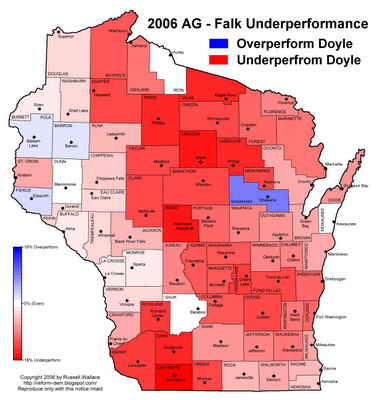

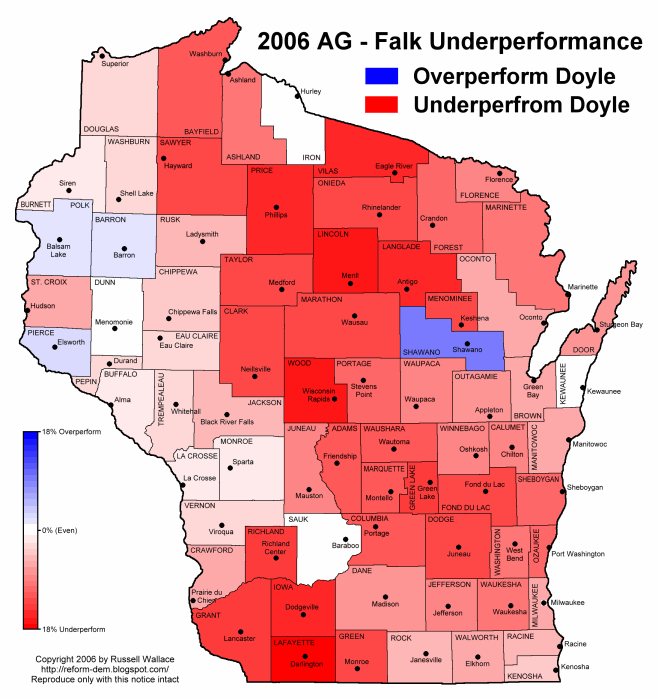
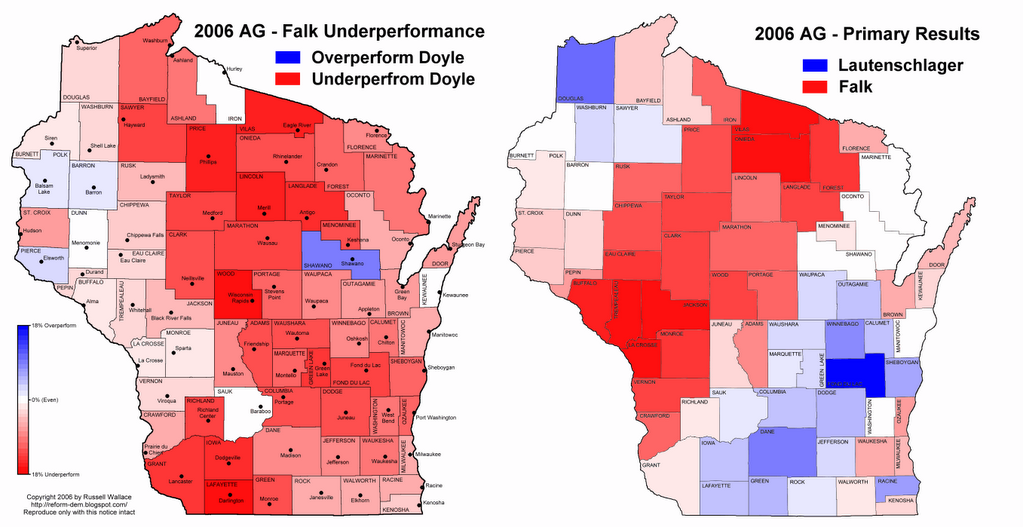
This map shows Falk's underperformance relative to Doyle. As you can see, there's a strong and fairly clear pattern, and this pattern is the clue we need to solve the mystery. But what can we determine from this?

It's certainly clear from the map above that Falk didn't lose because of Dane County, which doesn't stand out as being significantly worse than the rest of the state. In fact, Falk underperformed similarly in both Dane County and Milwaukee County despite losing the primary in Dane County by 20% and winning it in Milwaukee County by 13%. And the pair of maps below shows that bad feelings from the primary race had little to do with the general election. Falk's underperformance is on the left, and the primary election results are on the right. Very different patterns, as you can see.
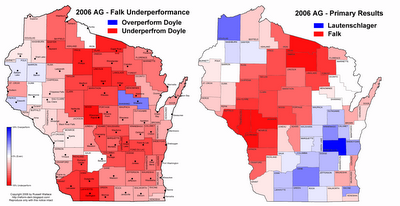

So we can safely lay to rest the idea that Falk's loss had anything much to do with her nasty primary battle against Peg Lautenschlager. The Democratic base was indeed mad at Falk, Doyle, and the Dem Party establishment for deposing Lautenschlager in the primary, but they still turned out and voted for Falk in the general election.

The next thing to check is if Falk's underperformance compared to Doyle matches with her overall electoral performance. Maybe some voters just didn't vote for the downticket races. But the map below shows it's more complicated that that.


Once again, the map on the left shows Falk's underperformance compared to Doyle, but this time the map on the right shows the AG general election results. They're closer, but still not really a match. I'm not going to bore you with the details, but I also compared Falk's underperformance to the results of the Governor's and the '04 Presidential race, and neither matched very well.

Which finally brings me to the meat of the issue. The thing that correlated most closely with the pattern of Falk's underperformance is Wisconsin TV media markets. This final (I promise!) map again shows Falk's underperformance, but also includes the media markets:
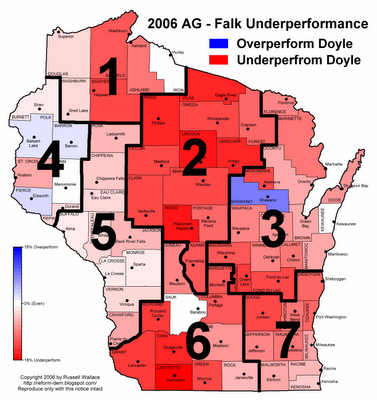

The markets are:
1. Duluth/Superior
2. Wausau/Rhinelander
3. Green Bay/Appleton
4. Minneapolis/St. Paul
5. La Crosse/Eau Claire
6. Madison
7. Milwaukee

Look at, #4 on the map, the Minneapolis/St. Paul market. Three out of the four counties where Falk actually overperformed Doyle are in this market. What's unusual about this market is that Wisconsin campaigns rarely advertise here because it's very expensive and reaches few Wisconsin voters. So it provides us a "pristine" model of what happens when voters don't see TV ads. The fact that Falk did so well there shows that in the absence of TV ads she was quite capable of matching Doyle almost vote for vote. Notice that this also tends to weigh strongly against the theory that voters supported Van Hollen because they wanted an AG to keep an eye on Doyle.

But voters in all the other media markets were inundated with attack ads against Falk from both Van Hollen and Wisconsin Manufacturers and Commerce (WMC). Negative ads are designed to suppress votes, and that's exactly what they did.

But there's still one more piece of the puzzle that I need your help to solve. Check out the La Crosse/Eau Claire market, #5 on the map. Falk's performance wasn't great there, but it was still significantly better than in any of the other remaining markets. Had Falk done this well across the state she would have won. My guess is that either Van Hollen or WMC didn't advertise in that market. If you live in that area please leave a comment and let me know what ads you saw and on which stations.

But what about the message theory? I just don't have enough information to make a good judgment on this one, although it's clearly secondary to the attack ads. But my gut feeling is that Van Hollen gained some additional advantage from his strong and consistent message, and this contributed to his significant overperformance compared to GOP Gubernatorial candidate Mark Green.

There are some anomalies in the maps that I can't explain, such as Shawano and Sauk Counties. If you have any idea what was different about these counties, or any of the others that didn't fit the general pattern, please let me know in the comments.

The results of this election don't bode well for Kathleen Falk's political future. Rightly or wrongly she'll get the blame for costing us the AG's race in what should have been a Democratic sweep. But perhaps even more important is that WMC has shown they don't like Falk, and will go to the mat to keep her out of statewide office. To have any chance of success at running for AG or Governor in the future Falk would probably have to make a deal with WMC, which would mean selling out on her progressive history and values.

The involvement of WMC in this race is one of the reasons I've always felt, and still do, that Peg Lautenschlager would have been a stronger candidate than Falk in the general election. I may be wrong, but I think WMC would have had a much harder time demonizing Lautenschlager, if they had chosen to get involved at all. But this is just speculation.

I've shown pretty conclusively that Falk's loss wasn't due to her divisive primary battle or to voters wanting an AG to keep an eye on Doyle. Turns out the insiders are probably pretty much correct when they say that WMC bought the election. Which seems almost like cosmic justice given that Falk used exactly the same technique to win the primary.

Live by the sword, die by the sword...

Thursday, November 09, 2006

Finally!

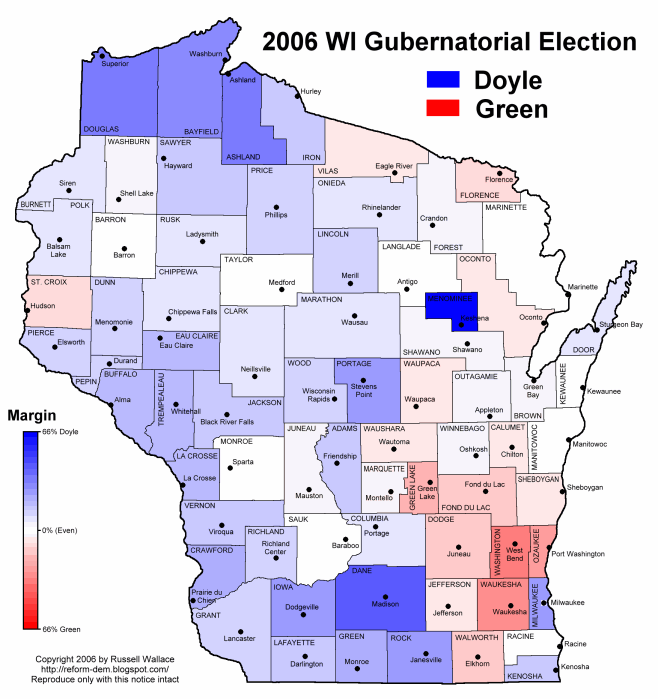
Doyle Vs. Green


(Click on map for larger image)

Nothing terribly surprising to me here other than Doyle's overall strength. But there are a couple of things I'm going to look at when I get a chance. I've mapped out the '02 results, and I'll correlate them with the '06 results to see how individual counties are trending. Also, I want to look at the marriage amendment and try to tease out the truth about how it impacted the Governor's race. Everybody's speculating, but nobody seems to have any hard data to back it up...

Wednesday, November 08, 2006

The Most Homophobic County in Wisconsin

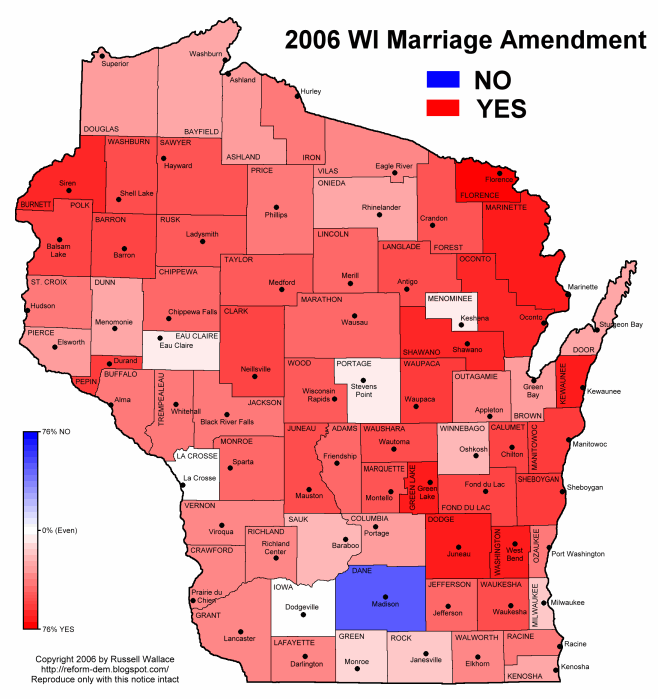
Yesterday Wisconsin overwhelmingly voted for a broadly drawn state constitutional amendment that bans both gay marriage and anything "substantially similar to that of marriage for unmarried individuals", meaning civil unions and possibly even domestic partner benefits. The results were 1,259,489 (59.4%) in favor of the amendment, and 860,996 (40.6%) opposed.


(Click on map for larger version)

Red is support for the marriage amendment, blue is opposition. And the single most homophobic county in Wisconsin is ... Florence County! That's right, Florence County, in northeast Wisconsin, wins the prize as the very worst of the worst, a true bastion of hate and intolerance. Although, as you can see from the map, the competition was mighty tough, with a half-dozen other counties close behind.

Only Dane County voted to oppose the amendment, although La Crosse County was evenly split, and Iowa, Eau Claire, Portage, and Menominee Counties weren't too bad. Sadly, Milwaukee County supported the amendment 55% to 45%.

The CNN exit poll had some interesting results. The cross-tabs show that support for the amendment was most strongly correlated with church attendance, ideology, and support for George Bush. Democrats opposed the amendment 65% to 35%, and Republicans supported it 84% to 16%. Independents split right down the middle.

The results in Milwaukee County are explained at least in part by the fact that support depends on race, with blacks significantly more likely to favor of the amendment than whites, although, strangely enough, CNN has deleted that data from the poll. It was there last night, but now it's gone.

The lone bright spot in all this is that support depended strongly on age ranging from 40% for people under 30 to 67% among people 59 and older. Which means that in twenty years or so we might actually have a shot at overturning this disaster...